Standard Pallet Sizes for Freight

03 Sept 2026
The standard pallet is 48 by 40 inches because two of them fit across a trailer. Everything else about pallet pricing follows from that one fact.
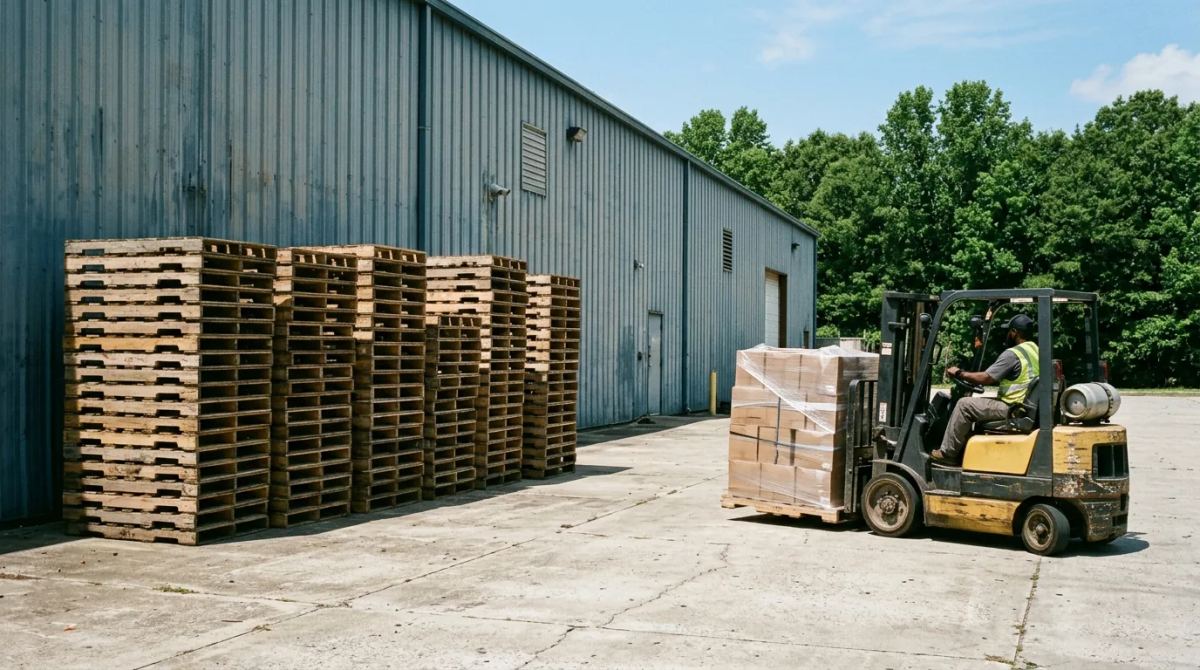
The standard pallet in North America is 48 inches long by 40 inches wide. Most guides stop there, which is fine if you are buying pallets and no use at all if you are shipping on one.
What matters to a shipper is what that footprint does to the price. Pallet size decides how many fit on a truck, how the freight is handled, and what class it gets rated at.
What is a standard pallet?
48 by 40 inches, usually called a GMA pallet after the Grocery Manufacturers Association, which standardised the footprint in the 1960s so freight could move through the supply chain without being re-palletised at every handoff.
In other units that is 4 feet by 3 feet 4 inches. It occupies 13.3 square feet of floor, which is the number that matters when you are working out what fits.
Empty, a wooden one stands about 5 to 6.5 inches tall and weighs 35 to 50 pounds depending on the timber and its condition.
Why 48 by 40 is the standard
Because two of them fit side by side across a trailer.
The interior width of a standard dry van is roughly 100 inches. Two 48-inch pallets set across it come to 96, leaving working clearance. That single fact is why this footprint exists, why it ships at the lowest cost per pallet, and why anything else costs more: a pallet that does not pair up wastes trailer width, and you pay for the space whether you fill it or not.
Everything downstream follows from it. Racking, forklift forks, pallet jacks and carrier pricing are all built around the same rectangle.
Estimate your freight class before you ship
Enter the dimensions and weight and get the class your density suggests, with the full NMFC scale alongside it.
Open the calculatorHow much a pallet weighs and holds
Three numbers, and shippers routinely use the wrong one.
Empty weight is 35 to 50 pounds for wood, 15 to 30 for plastic. This has to go into your declared weight, because the carrier weighs the whole handling unit.
Dynamic load is what the pallet carries while it is moving and being handled, typically 2,000 to 4,600 pounds depending on construction and grade. This is the figure that matters for freight.
Static load is what it holds sitting still in a rack, and it is far higher. Quoting the static figure to justify a heavy shipment is how pallets fail on a forklift.
How many fit on a truck
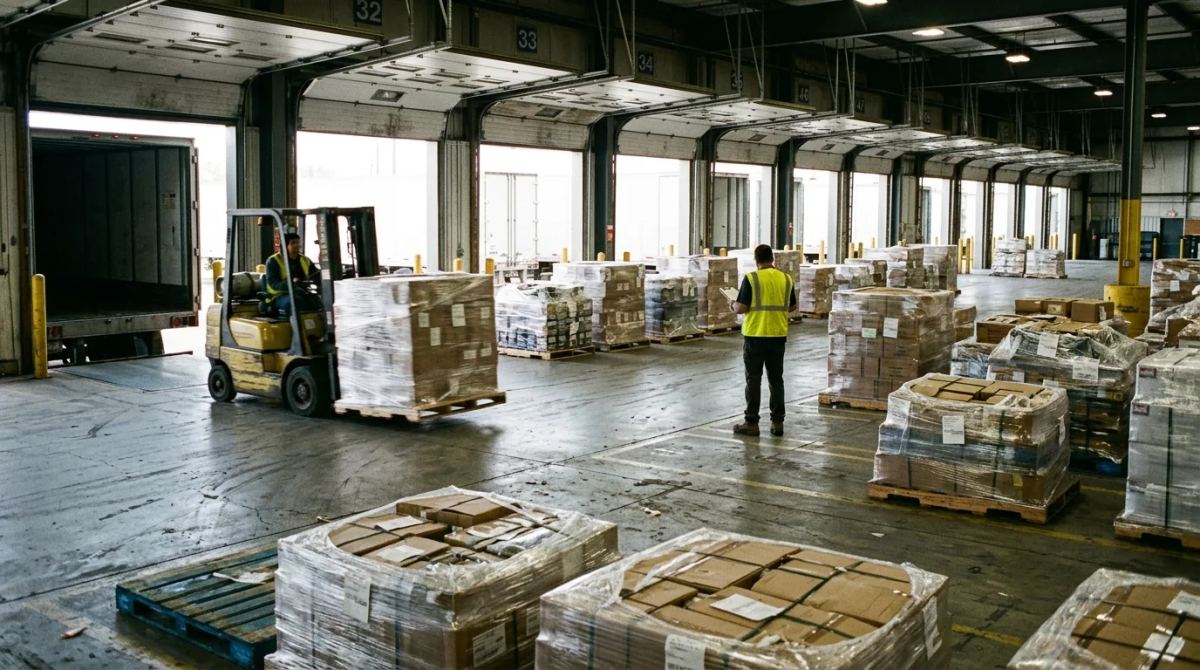
A 53-foot dry van floor-loads 26 to 30 standard pallets, depending on whether they are loaded straight or turned. Double-stacked, where the freight allows it, that rises to roughly 40 to 52.
Smaller equipment scales down predictably. A 26-foot box truck takes around 12, and a sprinter van takes one to three, occasionally four in the larger models.
Those numbers assume 48x40. Mix in other footprints and the count drops, because the rows stop lining up.
Stringer vs block, and why entry matters
Two ways of building the same footprint, and the difference shows up at the dock rather than on paper.
A stringer pallet uses three long boards running between the top and bottom decks. It is lighter and cheaper, and it is what most recycled 48x40 pallets are. Notches cut into the stringers give partial four-way entry.
A block pallet uses nine blocks instead of stringers, which leaves genuine openings on all four sides. Stronger, heavier, more expensive, and properly four-way.
Entry is the practical part. A two-way pallet can only be picked up from two opposite sides, so it cannot be turned during loading. In a tight trailer or a busy cross-dock that costs time, and time is what accessorial charges are made of.
The other footprints you will meet
| Size (inches) | Where you see it | Notes |
|---|---|---|
| 48 x 40 | Everything. GMA standard | The default. Two across a trailer |
| 48 x 48 | Drums | Rows stop lining up |
| 44 x 44 | Chemical drums | Rows stop lining up |
| 42 x 42 | Paint, telecom | Common on coatings freight |
| 48 x 45 | Automotive | |
| 48 x 36 | Beverage, shingles | |
| 48 x 20 | Retail half pallets | Display and in-store use |
| 47.2 x 31.5 | Euro pallet (1200 x 800 mm) | Does not fit US racking or trailer maths |
There are also many other pallet sizes that may be custom made for a particular shipper. At Laufer Trucking, the asset partner of LT2 Logistics, we have seen pallets of sizes not on this list. Some can be very long but not very wide, and some can be wide and long, depending on the product.
It is helpful to let your carrier or broker know your pallet sizes at the time of booking.
Pallet grades, and why they matter to your freight
Recycled pallets are graded on condition. Grade A has been used lightly and repaired properly. Grade B has had stringers repaired or replaced, often with a second stringer nailed alongside the damaged one. Grade C has been through several repair cycles with inconsistent boards, and most companies will not accept it.
The weight and quality of the product you are shipping, and how many times you expect it to be handled, determine the pallet grade you need.
Pallets that shift or collapse in transit are the leading cause of LTL damage claims, and a repaired stringer is often a root cause. On freight that will be handled four or five times across a terminal network, the pallet underneath is part of the packaging, not a free accessory that came with the load.
What your pallet does to your freight bill
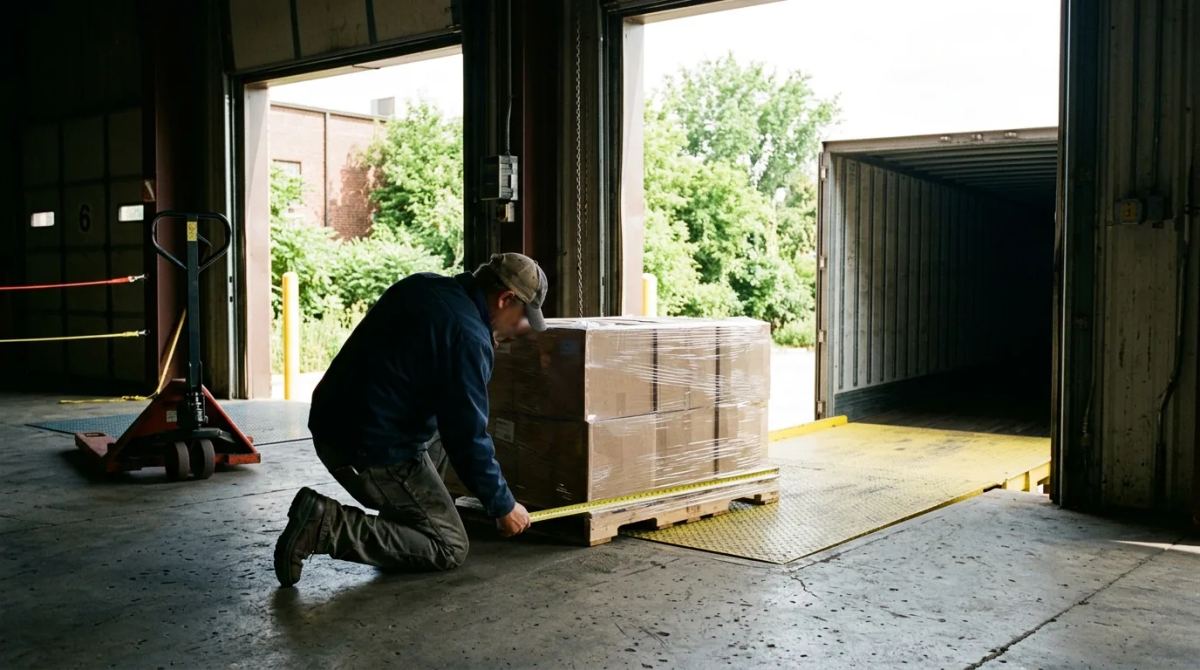
Freight class is driven mostly by density, and density is weight divided by the space the shipment occupies. The carrier measures the whole handling unit: the pallet, the goods, the wrap, and anything hanging over the edge. The pallet's 5 to 6.5 inches of height and 35 to 50 pounds of timber are both in the calculation.
You must include the dimensions and weight of the pallet in your calculation, because that is what the carrier does, then calculate the density-based class; a declaration based on the cartons alone gets reclassified. And overhang costs twice: it raises your measured footprint and it makes the freight harder to handle, which is how extra handling charges appear.
The full method is in our guide to freight class.
Getting palletized freight moved
LT2 Logistics arranges palletized freight across the United States and into Canada, on everything from a single pallet moving LTL to a full trailer.
If you are not certain how your freight should be palletized, or you are shipping on a footprint that is not 48x40, call us at (262) 888-3553 with the dimensions and the weight before it ships. We will tell you what it will class at and whether the pallet count is costing you a position on the trailer. More on how LTL works.