What Is a Routing Guide?

06 Aug 2026
A routing guide decides which carrier gets your freight first, and which ones get it when the first says no. Every step down the list costs more than the one above it.
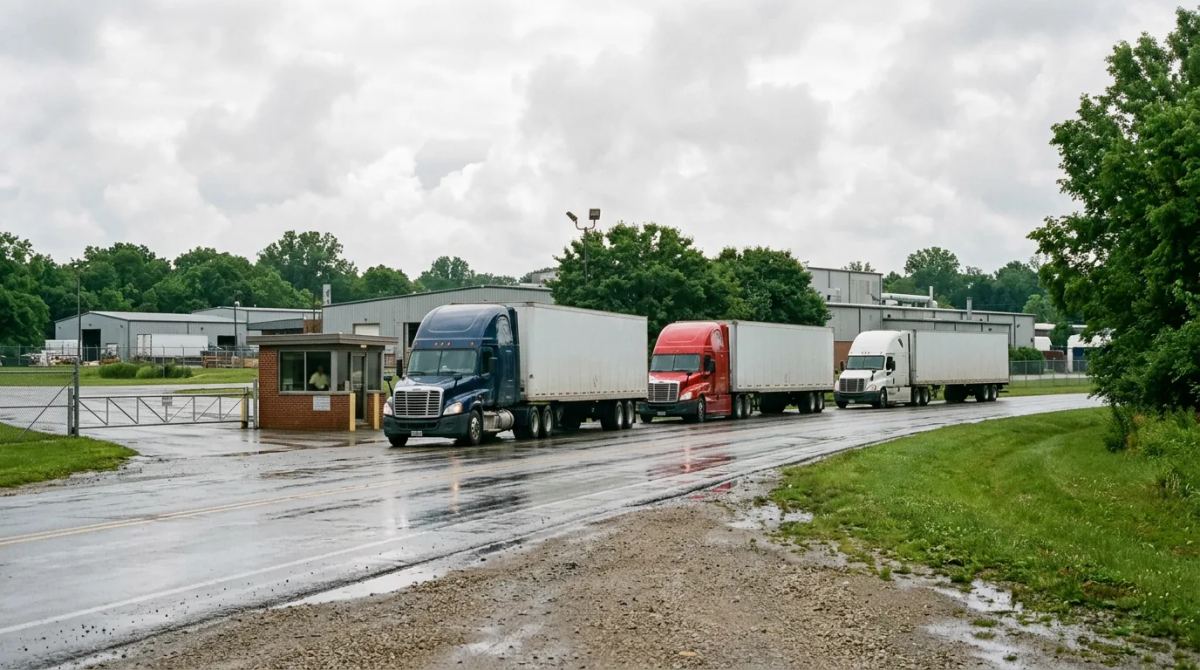
A routing guide is a shipper's ranked list of carriers for each lane. It says who gets offered the freight first, who gets it if the first carrier declines, and what each of them has agreed to charge.
It matters because every step down that list costs more than the step above it, and most shippers only find that out after the fact.
What is a routing guide?
For each lane a shipper runs, the guide names a primary carrier and a set of backups in order. The primary has usually won the business through an annual bid and has committed to accept most of the freight on that lane at an agreed rate. The backups sit behind it, priced a little higher, as the safety net.
When a load needs to move, it is offered to the primary first. That offer is a tender, and how tendering works is covered in our guide to shipment tendering.
What goes in one
The carrier list is the part people picture, but a working routing guide carries more than that.
Carriers ranked by lane, with the agreed rate for each. Service levels and transit expectations. Which mode applies at which weight or pallet count, so a load does not end up on the wrong equipment. Documentation requirements. Accessorial approval steps, so nobody authorises detention without knowing. Delivery instructions and appointment rules. And an escalation path for when something goes wrong.
Guides written for suppliers usually go further and specify packaging, labelling and pallet standards, because the company receiving the freight wants it to arrive in a form their dock can handle.
How the cascade works
A rejection does not stop the load. It moves it down the list, and each step has a price.
| Step | What it is | What it costs you |
|---|---|---|
| Primary carrier | First offer, contracted rate | The rate you negotiated |
| Backup carriers | Next in the guide, usually two or three | Higher with each step down |
| Spot market | Whatever it takes to get a truck today | Unpredictable, and often much higher |
| Nothing covers it | The pickup window closes | A missed delivery |
The industry standard for primary tender acceptance is 90 percent. Below about 85 percent, a shipper is quietly leaking volume into more expensive backups and spot loads, and the contracted rate they negotiated is no longer the rate they are paying.
How deep should the backup list go?
Most guides carry two to three backups per lane. The exception is a lane with genuine volatility, seasonal produce or a market with thin capacity, where a fourth is worth having.
Beyond that, depth stops helping. Research from C.H. Robinson found that when capacity is plentiful, guides tend to perform by the second backup and anything below that sits unused. And in both loose and tight markets, the deeper into the guide a load travels, the higher the price. Adding a fifth carrier does not protect you; it just gives an expensive load somewhere else to go.
The more useful question is not how many backups you have but whether the ones you have can actually take the volume. A backup carrier who has never run the lane is a name on a list.
What routing guide compliance means
Compliance is the share of loads that actually move with the carrier the guide assigned, at the rate the guide agreed.
Non-compliance is rarely deliberate. One urgent shipment goes outside the guide because somebody needed a truck. Then another. Each one is defensible on its own and the pattern is expensive, because freight booked outside the guide is booked at spot rates, at premium service levels, or with carriers who never agreed to your terms.
The cost is invisible until somebody measures it, which is why compliance is worth tracking as a number rather than as an impression.
Do you need one?
Many shippers do not, and it is worth saying so plainly rather than implying every operation should have one.
Two conditions make a routing guide worth building: more than one carrier serving a facility, or dedicated capacity moving to more than one facility. If neither is true, a routing guide is paperwork describing a decision you were going to make anyway.
Volume is not the test. A shipper moving forty loads a week on one lane with one carrier does not need a guide. A shipper moving eight loads a week across three lanes with four carriers probably does.
When a customer hands you their routing guide
Most of what is written about routing guides assumes you are the one writing it. For a lot of suppliers the experience runs the other way: a large customer sends theirs and tells you to ship on it.
Four things to check before the first load moves.
Which carrier applies to your freight. Guides usually split by weight band, mode and lane. Using the wrong one is normally chargeable back to you.
The lead time they require. Booking inside their window is often the difference between compliance and a chargeback.
Who pays, and how it is marked. Routed freight is usually shipped collect on the customer's account, which changes what goes on the bill of lading. That is covered in freight prepaid vs collect.
What happens when their carrier does not show. This is the one suppliers forget. The freight is still your problem until it leaves, and the guide rarely tells you who to call.
Where a broker fits
A broker is not usually a carrier in your routing guide. A broker is what covers the load when the guide has run out and the alternative is the spot market.
Which is worth being straight about: if your guide is failing regularly on a lane, you have a pricing or a capacity problem before you have a broker problem, and adding names to the list will not fix it. What a broker gives you is a way to cover the load today without paying whatever the spot market feels like charging, and a view of what that lane is actually worth in the current market.
LT2 Logistics arranges freight across the United States and into Canada. Every carrier is verified before it touches your freight: operating authority, insurance and safety history, monitored on an ongoing basis rather than checked once. Laufer Trucking, the asset-based carrier behind LT2, is the kind of carrier that sits in a routing guide. LT2 is what you call when yours has run out.
If a lane keeps falling through to your third carrier, call us at (262) 888-3553 with the lane and we will tell you what it is costing you and what it should be priced at. More on how our brokerage works.