What Does a Freight Broker Do?

17 Sept 2026
A freight broker arranges transport utilizing the assets of other motor carriers. Here we’ll cover what happens when you reach out to a broker to cover a shipment, what services you are actually receiving, and when you would be better off booking directly with a carrier.

A freight broker arranges the transport of your freight without owning the truck that moves it. You give them a lane; the broker sources, vets and manages a carrier while they run the lane.
Of course, it is not as simple as it sounds, there are a lot more steps involved in the background.
What does a freight broker do?
Since a broker does not own trucks, they act as an intermediary between the shipper and the carrier.
A broker matches freight to capacity, provides pricing, verifies the carrier is legitimate and insured, ensures the load is picked up and delivered as planned, handles all necessary documentation, and provides updates as the load is in process through delivery.
How the process works
Let’s follow a shipment from start to finish.
Customer sends the details. Origin, destination, freight commodity, weight and when it needs to pick up and deliver.
Broker provides pricing. Not from a list, but based on current market conditions and carriers available at the time of service, the parameters of the shipment and what equipment is required.
Customer accepts pricing and the shipment moves forward. The broker offers pricing and the customer chooses if the shipment will move forward with a selected carrier. How that works is covered in our guide to shipment tendering.
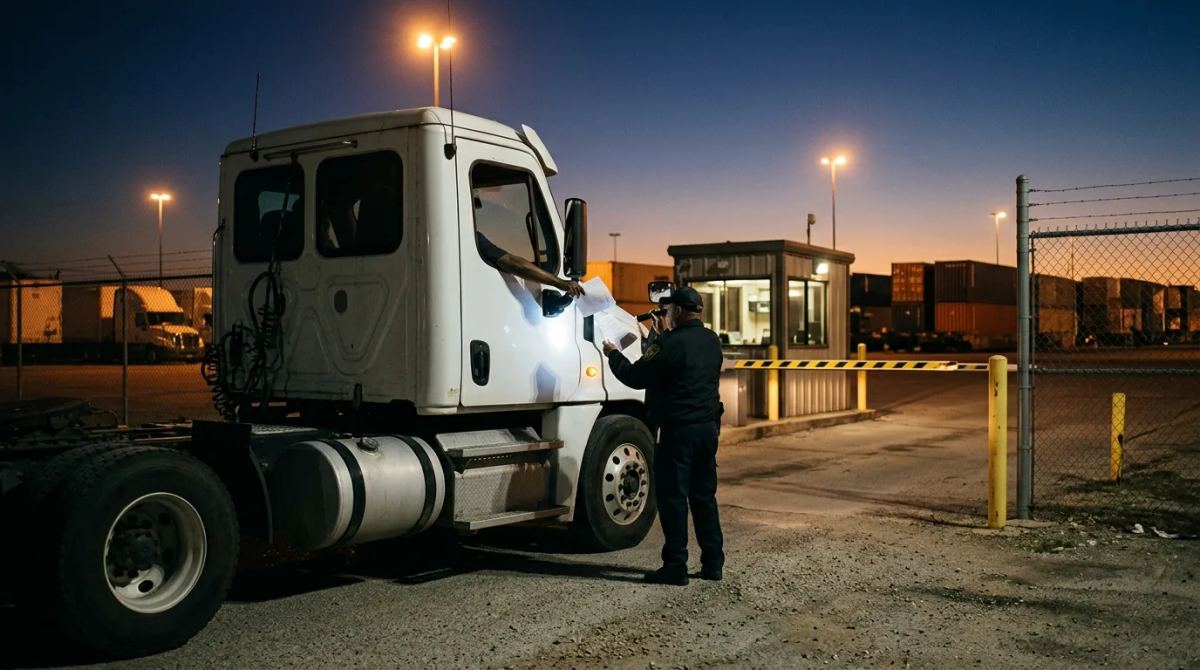
The carrier is verified before being assigned to a customer’s load. Operating authority, insurance, safety and performance history are all reviewed.
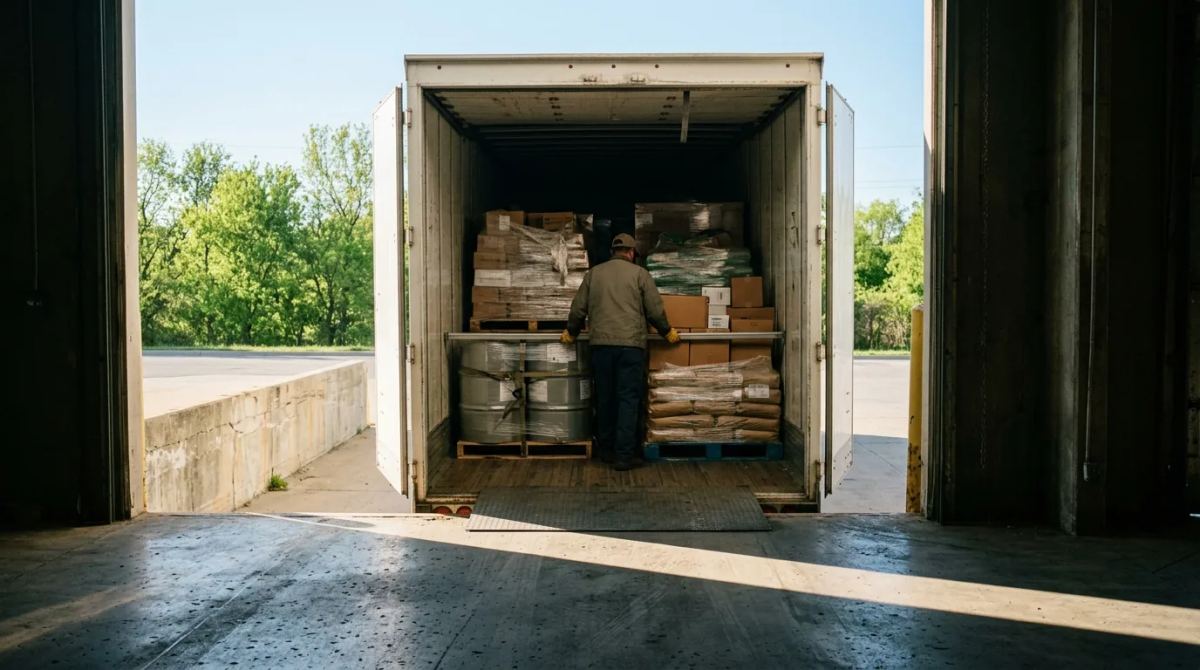
Carrier is dispatched and tracked. The carrier is tendered the shipment, and ETAs for pickup and delivery are communicated. The carrier sends photos of the load and bill of lading at pickup in many cases, and that information is shared with the customer.
In transit. The broker stays in communication with the carrier about delivery ETAs and any issues during transit or at delivery.
Delivery. The carrier shares the proof of delivery, which is then supplied to the customer in real time.
Invoicing. Signed paperwork comes back, the carrier bills the broker and the broker bills the customer. Often, the broker is paying the carrier before the broker itself gets paid, as many carriers request quick payment terms.
Communication and oversight is where the value sits when utilizing the right brokerage partner. When a truck breaks down two hundred miles out and the freight needs re-covering the same day, the right broker may be able to recover the freight. Delays due to weather, traffic and breakdowns are all routine in trucking. Proper communication is the key to knowing where your freight is and when it will actually arrive.
What a broker needs from you
A quote is only as accurate as the information provided when requesting pricing, and most bad quotes trace back to a missing detail rather than a bad broker.
The following information helps to produce an accurate rate: exact origin and destination, including whether either end is a dock, a jobsite or even someone’s house; what the freight is and how it is packaged; the weight and dimensions; pickup and delivery dates and times; and anything unusual about either end, such as a liftgate, a required appointment or a site that may be difficult to access.
With this information, a broker can price the lane properly. When parameters change after a shipment is booked, it is possible pricing may change, and that is a situation no one wants.
The details that most often get left out are the ones that turn into accessorial charges: no dock at the delivery end, a residential address, or a receiver who needs an appointment but no appointment was booked. Some of these items may add cost at quoting, but that is better than the cost being added after the shipment is already booked.
What a customer is buying when working with a brokerage
Access to capacity you cannot reach alone. A shipper deals with the carriers they have accounts with. A broker deals with hundreds of carriers and has the right connections and programs to find the right carrier for the job.
Pricing built on current markets and capacities. Your freight is priced against the broker’s whole available network. Pricing can be volatile. Being able to move freight is based on the rates needed to secure a carrier at any given time.
One person overseeing your shipment. At LT2, once we have a customer’s shipment, we are ensuring things go smoothly from start to finish and communicating the desired information with the proper parties throughout the process.
All shippers have different priorities. When asked directly, the answers tend to come back in the same order: reliability, then availability, then cost. Not because cost does not matter, but because a cheap quote from somebody who cannot cover the lane when it matters is not a savings. Ultimately, the shipment will be delayed and the price will go beyond the original quote. Reliability and availability mean the load picks up and delivers as agreed upon, time after time.
Broker, carrier, 3PL or forwarder
These four get used interchangeably, and they are not the same thing.
A carrier owns the trucks and employs the drivers. They can be contracted directly with shippers or perform work through a freight broker.
A freight broker arranges transport with carriers. It is licensed, bonded and responsible for the transaction, but owns no equipment.
A 3PL usually does more than transport: warehousing, fulfilment and inventory. If a provider is storing your goods, that is a 3PL relationship rather than a brokerage one. Laufer Enterprises also does warehousing through Wacker Drive Logistics and Warehouse and can provide a 3PL experience for customers that have that need.
A freight forwarder handles international movement, customs entry and the documentation that goes with crossing borders by sea or air. Domestic road freight does not need one.
| Owns trucks | Licensed as | Use when | |
|---|---|---|---|
| Carrier | Yes | Motor carrier | You have steady volume on lanes they run, or a niche the carrier covers specifically |
| Freight broker | No | Broker, with a bond | You need capacity across varied lanes, one-off shipments and expedited freight |
| 3PL | Sometimes | Varies by service | You need storage and fulfilment, not just transport |
| Freight forwarder | No | Forwarder, often customs-licensed | Your freight crosses an ocean or requires air transport |
Most often confused is the 3PL arrangement, because it is a term that gets used loosely. If somebody is holding your inventory, that is a 3PL. If they are only moving it, they are a broker.
How brokers are regulated
To operate legally, a freight broker must hold operating authority from the FMCSA and carry a $75,000 surety bond. The bond exists so that if a broker fails to pay a carrier, there is money behind the obligation. Both are public and verifiable within minutes through FMCSA’s SAFER system.
The broker also carries real legal responsibility for the transaction, especially in light of recent lawsuits covering a broker’s responsibility in selecting carriers. What happens when things go wrong is covered in our guide to double brokering.
How brokers get paid
Brokers make money by marking up the cost the carrier quotes and passing that difference along to the customer.
The question worth asking is not whether there is a margin, but whether the rate you are being quoted is competitive with what you could get yourself. That depends on the shipment and many factors associated with it. Ultimately, a broker is able to reach a large network of carriers more quickly than a shipper can, which sometimes results in a better price, but not always.
When you do not need a broker
If you ship high volume on a small number of consistent lanes and have people whose job is managing carriers, you will probably do better going direct. If a company is large enough to put out RFQs on a regular basis, it will be able to manage relationships with multiple providers. That said, even very large shippers find value with freight brokers on difficult-to-cover lanes, when capacity gets tight with their regular carriers or when one-off shipments arise that may not be part of any of their current providers’ networks.
Even shippers with strong direct contracts keep a broker for the freight those contracts do not cover: spot loads, new markets, lanes that appear and disappear, and the week when your primary carrier has no trucks.
Another scenario where working directly with a carrier is ideal is when specialized equipment is required. For example, Laufer Trucking has a fleet of conestogas and step deck conestogas. These can be difficult to source at times, especially for local moves.
Most operations end up with both, and that is the sensible answer rather than a compromise.
Where LT2 fits
LT2 Logistics is a licensed freight brokerage arranging truckload, LTL, flatbed and expedited freight across the United States and into Canada.
We are part of the Laufer family of companies. Laufer Trucking is the asset-based carrier, running its own trucks and drivers out of Hartford, Wisconsin since 1977. LT2 is the brokerage arm, a separate entity, arranging capacity beyond what Laufer’s own fleet covers. As Krista at Laufer puts it, you will always know whether your freight is being handled by Laufer or LT2. Same team, same standards, either way.
Every carrier we use is verified before it touches your freight and monitored on an ongoing basis rather than checked once at setup.
If you are working out whether a broker fits how you ship, call us at (262) 888-3553 and talk through your lanes and your volume. If you would be better off direct on your main lanes, we will say so. More on how our brokerage works, or send us a lane to price.