What Is an LTL Freight Broker?

25 Aug 2026
A broker prices your freight at pooled volume rather than your own. That gap is the whole rate advantage, and it closes as you grow.
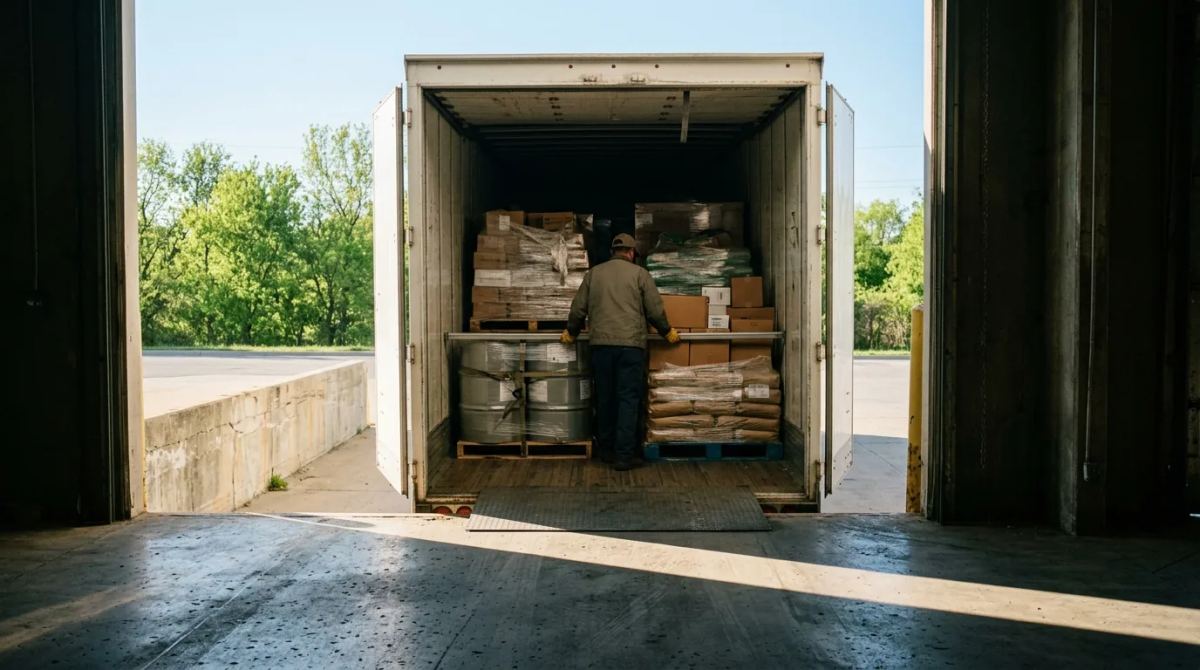
An LTL freight broker arranges your less-than-truckload shipments with carriers rather than hauling them. You deal with the broker; a carrier moves the freight.
The reason shippers use one comes down to a single mechanism, and most articles on the subject bury it under a list of benefits.
What is an LTL freight broker?
A broker is a licensed intermediary, and the job is the same whatever the mode. To operate legally in the United States a freight broker must hold operating authority from the FMCSA and carry a $75,000 surety bond, which exists to protect carriers and shippers if the broker fails to pay.
The broker holds the relationship with you, negotiates the rates, chooses the carrier, and handles the paperwork and the problems. The carrier supplies the truck and the driver. Both are real parties to the shipment with their own obligations.
How brokers actually get better rates
Here is the mechanism.
LTL carriers price on volume. A company shipping four pallets a month calling a carrier directly gets that carrier's published rate, because four pallets a month buys no negotiating position. A broker moving thousands of shipments across many customers has negotiated a blanket rate on that whole book.
When you ship through a broker, your freight is priced at the pooled volume level rather than at your own. That gap is the entire rate advantage, and for a small or mid-size shipper it is usually larger than the broker's margin.
It also explains why the advantage shrinks as you grow. Once your own volume is large enough to negotiate with, the gap closes.
What else a broker does
Rates are the headline. The rest is where most of the day-to-day value sits.
Checking the freight class before it ships, which prevents the reclassification bills that catch shippers who estimated rather than measured.
Declaring accessorials in advance. A liftgate arranged at booking costs less than one arranged at the dock, and far less than a failed delivery.
Choosing the carrier type that suits the lane rather than defaulting to whoever quoted first.
Handling the problem when a shipment is late, damaged or misrouted, without you managing three carrier relationships to do it.
One point of contact across every lane you run, instead of a separate account and portal for each carrier.
When going direct is better
Sometimes it is, and it is worth saying so plainly rather than pretending a broker suits everyone.
Going direct tends to win when you ship high volume on a small number of consistent lanes. Somewhere around a hundred or more LTL loads a month, concentrated on lanes you run every week, you have enough weight to negotiate a real contract yourself. At that point you are buying at close to the rate a broker would get, without the margin in between.
It also needs staff. A direct arrangement means managing carrier relationships, contracts, compliance checks and claims in house, which is a job rather than a task.
Between roughly ten and fifty loads a month across mixed lanes is where a broker usually wins, because the savings from comparing carriers on every shipment outweigh what you could negotiate with any one of them.
One detail worth knowing if you are considering going direct: carriers value consistency more than raw volume. Weekly shipments on the same lane are worth more to them than sporadic large ones, and that is what earns a rate.
The downside of using a broker
There is one, and it is not the margin.
Adding a party can diffuse accountability. The carrier moves the freight but the broker owns the relationship, so when something goes wrong there are two organisations involved in resolving it. On a claim, that can mean a longer path to an answer than dealing with a carrier directly.
How much this matters depends entirely on the broker. A broker who takes the claim on and drives it is an advantage, because they have a standing relationship with that carrier that you do not. A broker who forwards your email to the carrier and steps back has added a delay and nothing else.
It is a fair question to ask before you book anything, and the answer tells you most of what you need to know.
Most shippers end up with both
The choice is rarely all one or the other.
A common arrangement is direct contracts on the core lanes, the ones you run predictably every week, where your own volume earns a real rate. Then a broker for everything else: spot freight, new markets, lanes that come and go, and the shipments that fall outside your contracts.
That keeps price stability where your volume is concentrated and flexibility everywhere else, and it means a capacity problem on one lane does not leave you without options.
How to check a broker is legitimate
Two things are verifiable in minutes, and both are public.
Operating authority. Look up the broker's MC number in FMCSA's SAFER system and confirm the authority is active and the company name matches.
The surety bond. A licensed broker carries a $75,000 bond. It is recorded against their authority, and a lapsed bond is a serious warning sign.
Beyond the paperwork, ask what they check on the carriers they use, how often they re-check it, and what happens to a carrier that fails. That question separates brokers more reliably than anything on a website, and it matters because an unvetted carrier is how freight ends up somewhere nobody authorised. That is covered in our guide to double brokering.
Working with LT2
LT2 Logistics arranges LTL across the United States and into Canada. We are a licensed brokerage backed by Laufer Trucking, an asset-based carrier that has been running its own trucks since 1977, which means the people arranging your freight have spent their careers around it.
Every carrier is verified before it touches your freight: operating authority, insurance and safety history, monitored on an ongoing basis rather than checked once at setup.
If you are working out whether a broker suits how you ship, call us at (262) 888-3553 and describe your volume and your lanes. If the honest answer is that you would do better going direct on your main lanes, we will tell you that. More on our LTL service.